
I hate making Dolcetto
So why do I keep making it?

One grower. One friend. And stubbornness.
Dolcetto has proven to be a most troublesome grape. I’ve been making it since 2019 from a spot in Lake County, on the Kelsey Bench around 1,500ft in elevation. Suffice it to say, it’s a well cared for vineyard run by Nick and Pietro Buttitta.
In fact, I buy all my Italian grapes from Nick; it’s been a good relationship. Sangiovese, Barbera, Negroamaro, Primitivo, and the pesky Dolcetto all from this one source.
Why did I start buying Dolcetto?
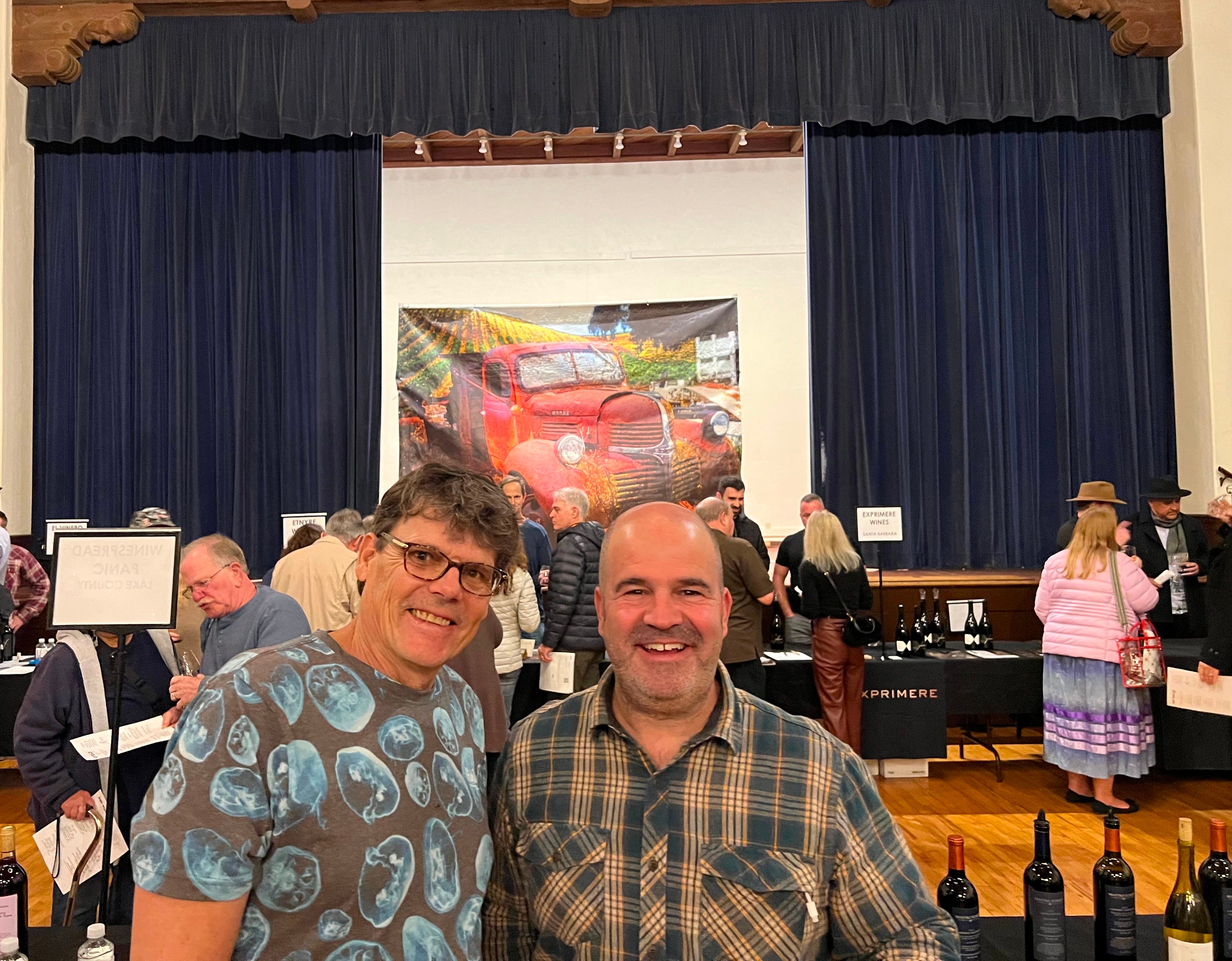
One of my friends from Mammoth, Mitch, was looking for something that wasn’t Zinfandel or Pinot for his own label, Wine Spread Panic. 2019 Dolcetto was his first wine and my first Dolcetto. Give his website and wines a look.
Dolcetto seems to grow heartily in this Kelsey Bench site and I’ve been told the Buttitta’s have to manage both the fruit set and the foliage each season. Understanding the Buttitta’s vineyard management, the fruit is generally ready to harvest sometime within the month of September, most typically mid-September.
There’s a bit of a ritual, once we get near harvest. I call Nick to make sure his old Chevy truck is working, the one he uses to deliver the grapes to me, and he tells me that it’s getting checked out and he hopes the Chevy will make it one more harvest, which it always seems to do.
The trick has been to manage the acid level, as measured by pH, and the sugar level as measured by brix. The acid on Dolcetto remains under 3.3pH until it doesn’t (meaning it can spike to 3.6pH in a couple days). All the while, the brix continues its steady climb higher and higher even while the acid remains under 3.3pH.
For comparison, the Sangiovese they grow is much more orderly when it comes to harvest brix and acidity. Easy to work with, consistent fermentation and results year after year. I love working with Sangiovese.
Yes, I know a little technical. Basically, pH numbers below 3.3 for red wine are usually too low to pick (which means it has a lot of acid) unless we were making Rosé or carbonic. I want the grapes to be at 3.4 at the lowest for a red wine. Natty winemakers can argue with me here, but this is where the site comes into play.
Kelsey Bench in Lake County can be hot. Streaks of 100+F weather during harvest. Brix will go up and up while Dolcetto holds its acid (somewhat like Barbera). Until it doesn’t and then you have to move.
Even if all goes well in the vineyard and Nick brings in pristine fruit, there comes the trouble of making it.
Look back to Italy for Guidance
I always try Dolcetto from Italy. I’ve had some rough ones and absolutely lovely ones over the years. What I define as “lovely” are lighter-bodied, red fruited smoother tannin wines with an easy finish. To describe it another way, pizza and BBQ wine like an old-school Dry Creek Valley Zinfandel should be. Fun, easy drinking, not too ripe, decent acid, red to black fruit.
I can manage the chemistry if needed, just like we do with Zinfandel. That’s not what I’m talking about. People in the industry talk about Pinot Noir as “the most difficult grape.” They’ve never worked with Dolcetto.
Gentleness is the top priority with Dolcetto. During fermentation, never punch it down, always pump-overs. As a standard for many wines, 2 pump-overs per day is a standard protocol until the end of fermentation. If you want more extraction, you do more pump-overs. With Dolcetto, I can get away with 1 pump-over per day by Day 3 of fermentation. (video is of the 2024 Dolcetto fermentation with my voiceover for Mitch)
The length of fermentation for most of the grapes I work with can go from 9 to 14 days. I’ve had Cabernet on for near 21 days sometimes and it makes a balanced wine. Dolcetto, the quicker the fermentation the better and the less time on the skins the better. But let’s remember, quicker fermentation means a warmer fermentation.
Generally, I wait for dryness as measured by brix of 0 in the wine before I put the skins in the press. With Dolcetto, I’ve pressed off at 3-5 brix.
Now with pressing, I work with a pneumatic bladder press. Let’s say most grapes I work with I can press out to 1 bar, still fairly light pressure. With Dolcetto, between 0.65 and 0.85. Anything over and the juice becomes bitter and astringent. And here’s the press-out of the Dolcetto.
Then it’s time to barrel down. I really only have 2 options, 59-gallon stainless steel and neutral oak. This is where Italians have the advantage. They have all manner of vessels, from ultra-large oak casks to concrete. The Italians also like to move wine from oak to stainless mid-way through aging. This is something I can do and will likely do this season.
Why? To keep flavors fresher, less reductive, and less imparted by oak, even the effects of neutral oak. Yes, there are some effects to the wine even in a 10 year old oak vessel, from micro-oxidation and whatever alchemy is going on in wood.
One way to mitigate this astringent quality is to age the Dolcetto longer in oak, then let it rest in bottle far longer than most American winemakers would—meaning longer than a day after bottling. Once again, taking cues from the Italians: patience.
I stopped bottling my own Dolcetto in 2022. I’ve found that in the Central Valley of California, the locals don’t care much for Dolcetto. It could be simply marketing, Dolcetto means “little sweet one” even though it’s a dry wine and the Central Valley has history with sweet reds. I have found that the 2022 Dolcetto is doing better at BBQs here in Fresno, but the wine is now in its 4th year, good for the wine, not great for winery cash flow. It really is a better wine after 4 years and it has a lot more life in bottle to live.
What do I do with the Dolcetto I continue to stubbornly make?
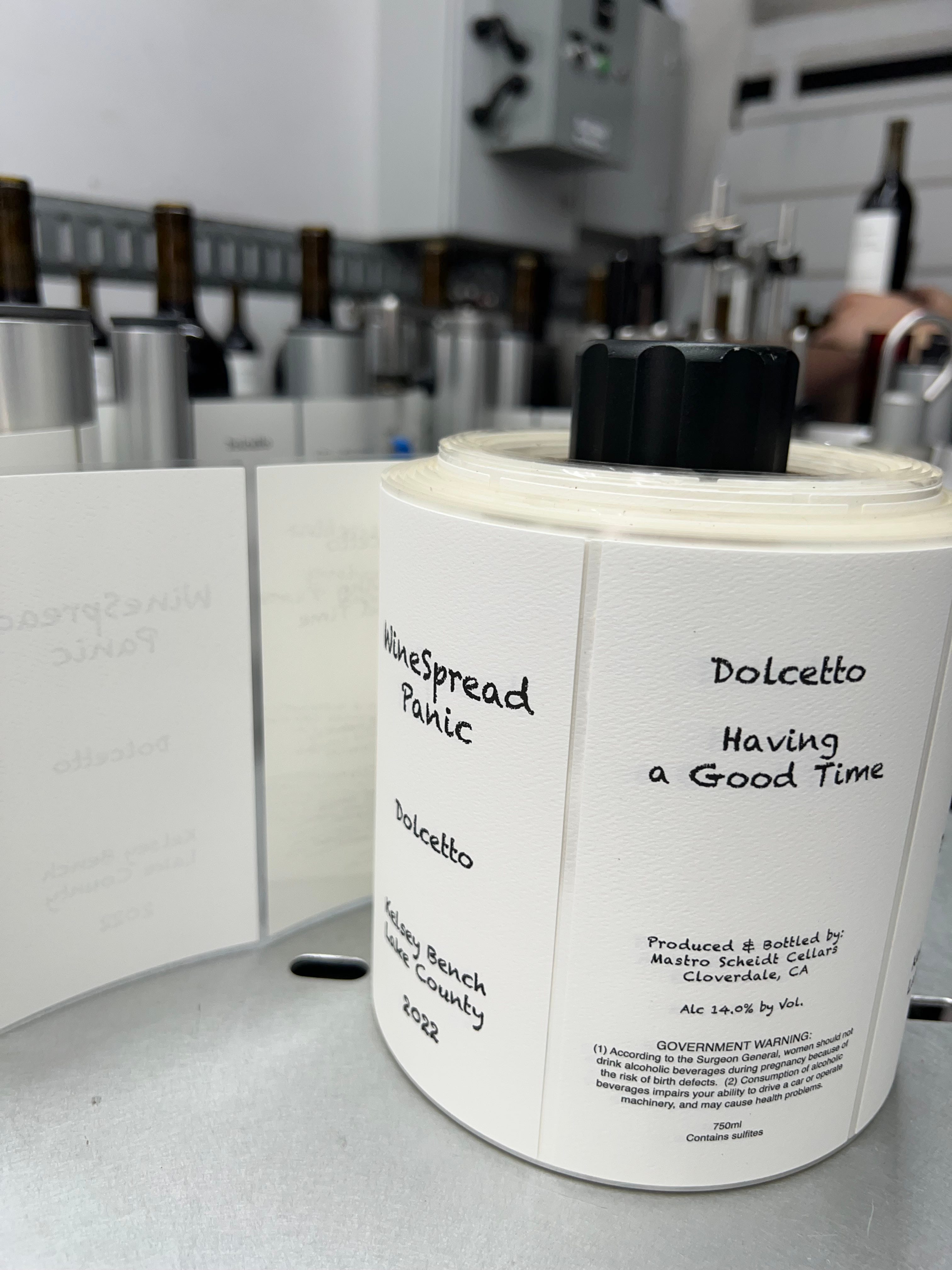
Mitch just bottled the Wine Spread Panic 2024 Dolcetto back in March of 2026. We are taking a page out of the Italian book: patience. A little longer in barrel than we’ve done before, 7 months longer than our normal 11 months for a total of 18 months. And a little more bottle conditioning. I like the result. The fruit is still fresh, the tannins are more fine grained, good core of red fruit in mid-palate. It’s the best one so far. The 2025 is promising as well, but it needs more time in barrel. I may rack one barrel off to stainless steel just to get a result on how it ages.
For my own winemaking, I have found that Dolcetto blends rather well with Cabernet Sauvignon and Cabernet Franc. It adds mid to back-palate structure to Cabernet Franc for sure and adds some background and tannin to softer Cabernet Sauvignon from Alexander Valley, somewhere around a 10% add is beneficial. The reverse is not true, you can’t add either Bordeaux to the Dolcetto to improve it.
We are rather quickly approaching the 2026 harvest, warm weather pushing things along. It won’t be long before I have that call with Nick about his Chevy truck and this loop of absurd stubbornness attempting to tame Dolcetto for another season.